When You're Told to Evacuate: Emergency Preparedness for Families Who Babywear
Whether it’s a wildfire, hurricane, flood, or another emergency, I hope you never have to leave your home with only a few minutes’ notice.
But if that day ever comes, having a plan ahead of time can make all the difference.
As a babywearing educator, one of the things I rarely see discussed in emergency preparedness is just how helpful a baby carrier can be. The CDC actually includes a baby carrier on its emergency checklist for families with infants because keeping your hands free while keeping your child close can make evacuating much easier.
In this post, I’ll walk through how I would prepare my own family, what I’d keep in a go-bag, feeding considerations, and why I believe every family with young children should have a baby carrier that’s ready to grab.
Start Planning Before There's an Emergency
The best emergency plan is the one you already practiced.
You don’t need a complicated binder full of instructions. Instead, think through a few simple questions:
Who grabs the kids?
Who grabs the go-bag?
Where will you meet if you’re separated?
How will you communicate if cell service is unreliable?
Does everyone know the evacuation routes?
If grandparents, babysitters, or other caregivers regularly watch your children, make sure they know the plan too. Even practicing the first few minutes of leaving can help everyone feel more prepared if you ever need it.
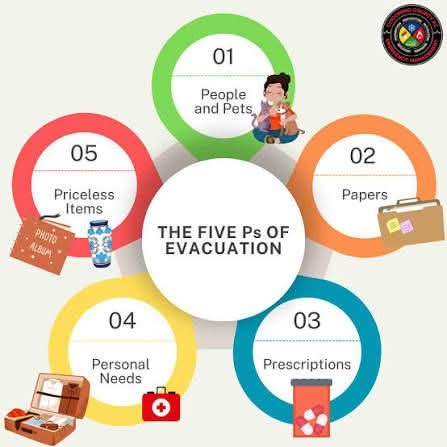
Build a Go-Bag That Actually Fits Your Family
Every emergency kit looks a little different because every family is different.
Instead of buying a generic emergency kit, build one around how your family actually lives.
Here’s what I’d include:
Hygiene
Diapers
Wipes
Diaper cream
Plastic bags for dirty diapers or clothes
Extra clothing
Blanket
Feeding
Shelf-stable snacks your child already enjoys
Water
Bottles or feeding supplies if needed
Formula or breast pump supplies if applicable
Comfort
Emergencies are scary.
A favorite stuffed animal, small blanket, bedtime book, or pacifier can help a child feel safe in an unfamiliar place.
Medical Information
Prescription medications
Allergy information
Pediatrician contact information
Insurance cards
Photos or identification for each child
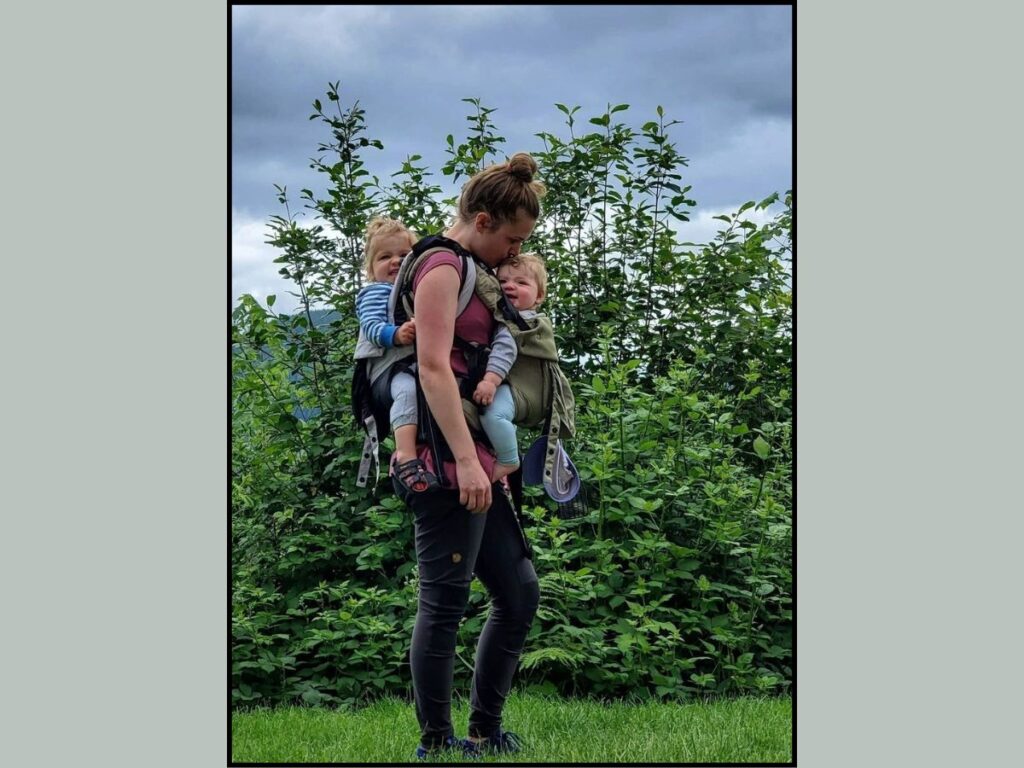
A Baby Carrier
This is one item I think often gets overlooked.
The CDC specifically recommends including a baby carrier in your emergency supplies because it helps keep your child close while leaving your hands available for everything else.
Families often think of baby carriers for infants, but they’re just as valuable for older children who may not be able to walk long distances during an evacuation. If you have a toddler or preschooler, check out my post on the best toddler carriers to see which options I recommend.
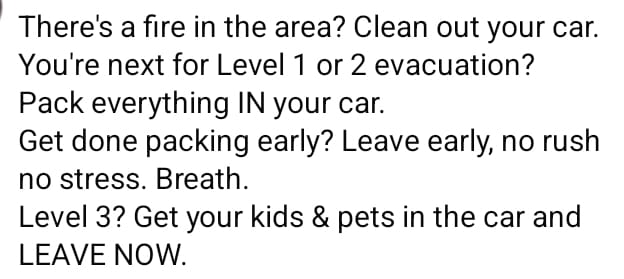
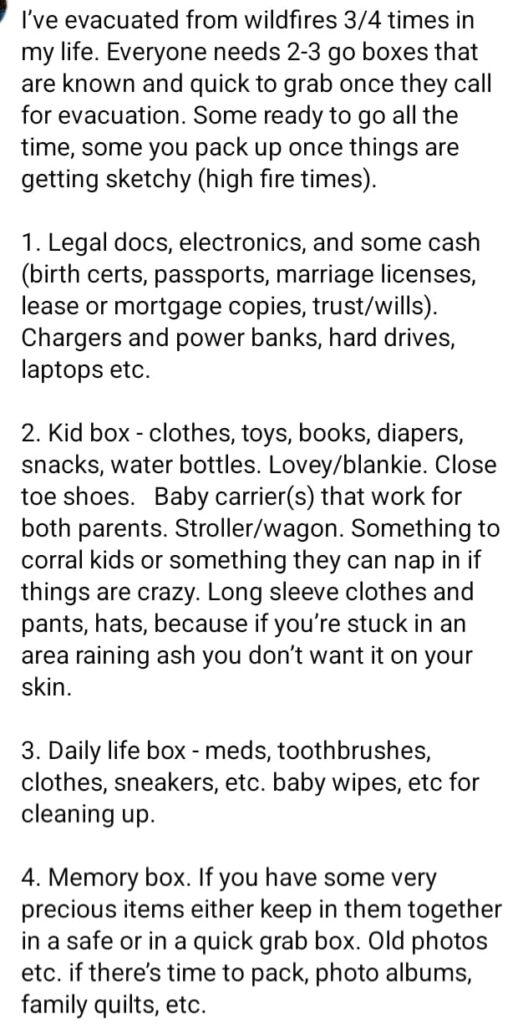
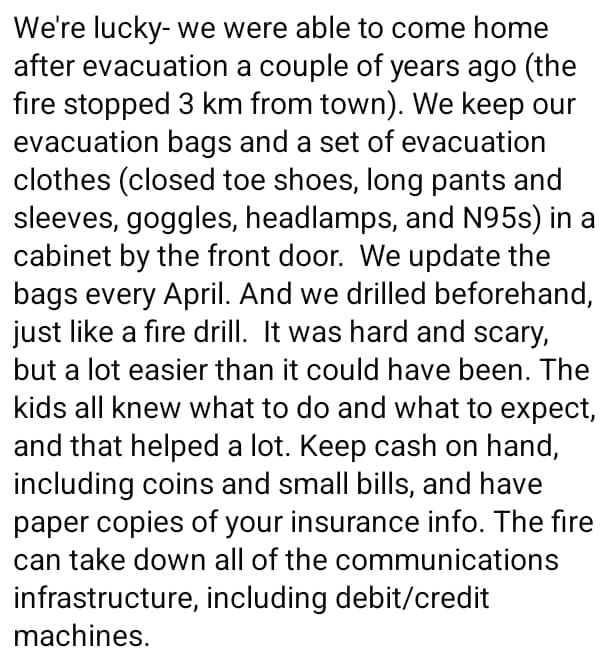
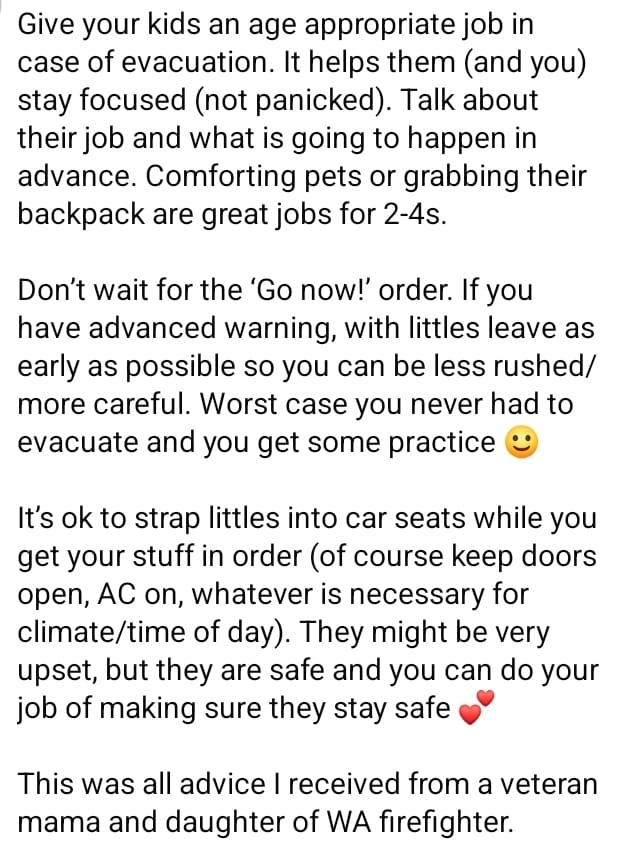
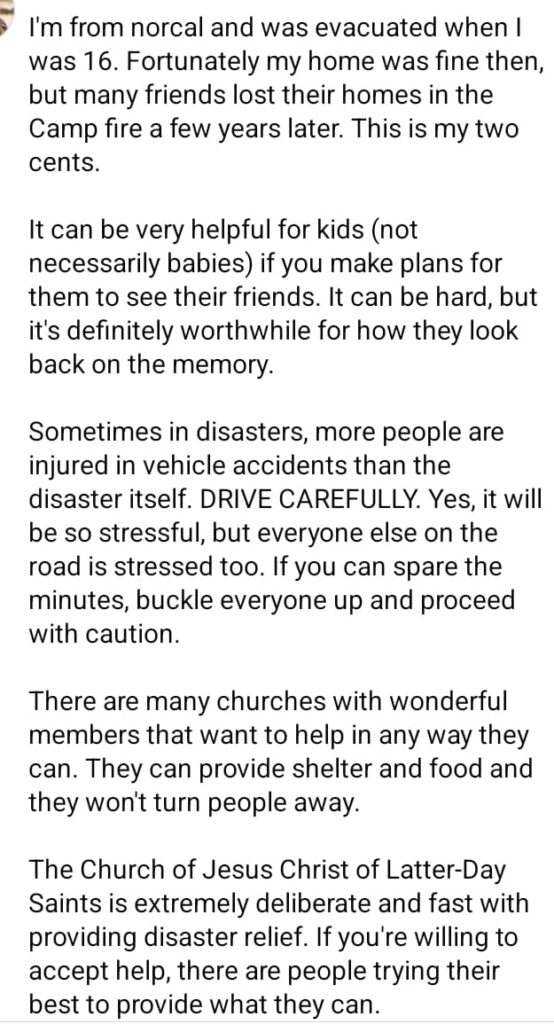
I asked my community what they would bring in their go bag and here are some responses I got:
Feeding During an Emergency
One of the biggest concerns parents have during disasters is feeding their baby.
If you’re breastfeeding:
Breastfeeding is the safest way to feed a baby during many emergencies because it doesn’t depend on clean water, electricity, or sterilized equipment.
Many parents worry that stress will make their milk disappear.
While stress can temporarily affect letdown, it does not stop milk production. Nursing frequently, staying close to your baby, and getting support whenever possible can all help.
If you’re formula feeding:
The CDC recommends ready-to-feed formula whenever possible because it doesn’t require water or mixing.
If you’re using powdered formula, make sure you have a safe water source and a plan for feeding equipment if bottles can’t be properly cleaned.
Why I Recommend Packing a Baby Carrier
A stroller works great in everyday life.
An evacuation is different.
You might be walking over uneven ground, climbing stairs, navigating crowded shelters, or carrying supplies.
A familiar baby carrier can help by:
Keeping your child close
Leaving your hands free
Helping support co-regulation during stressful situations
Making it easier to stop and feed your baby when appropriate
The key word here is familiar.
An emergency is not the time to figure out a new carrier or learn a new carry. Practice ahead of time with the carrier you already own so it feels like second nature if you ever need it.
If you’re new to babywearing, my babywearing for beginners post walks through the different types of carriers and how to choose one.
Babywearing Safety Still Comes First
Even during an emergency, safe positioning doesn’t change.
Always make sure:
Baby’s face stays visible.
Nose and mouth remain clear.
Chin isn’t tucked to the chest.
You continue checking positioning frequently.
If you nurse in the carrier, reposition your baby afterward so they’re upright with a clear airway before continuing.
Once You’re Safe
After you’ve evacuated, focus on the basics.
Follow updates from local emergency officials.
Ask shelters where you can safely feed your baby or wash feeding equipment.
Re-establish familiar routines when possible, even if it’s just a diaper change, a favorite song, or a few quiet minutes snuggled in the carrier.
Those small moments of normalcy can go a long way for both you and your child.
Final Thoughts
Preparedness isn’t about buying the perfect emergency kit.
It’s about making it easier to care for your children during one of the hardest moments you might experience.
For me, that means having a child-specific go-bag packed ahead of time, a feeding plan that fits your family, important medical information ready to grab, and a baby carrier you’ve already practiced using.
Hopefully you’ll never need any of it. But if you do, you’ll be glad you planned ahead.