
Best Front-Facing Baby Carriers of 2026: When Can Baby Face Forward?
By Cassidy Eisenfeld, certified babywearing educator
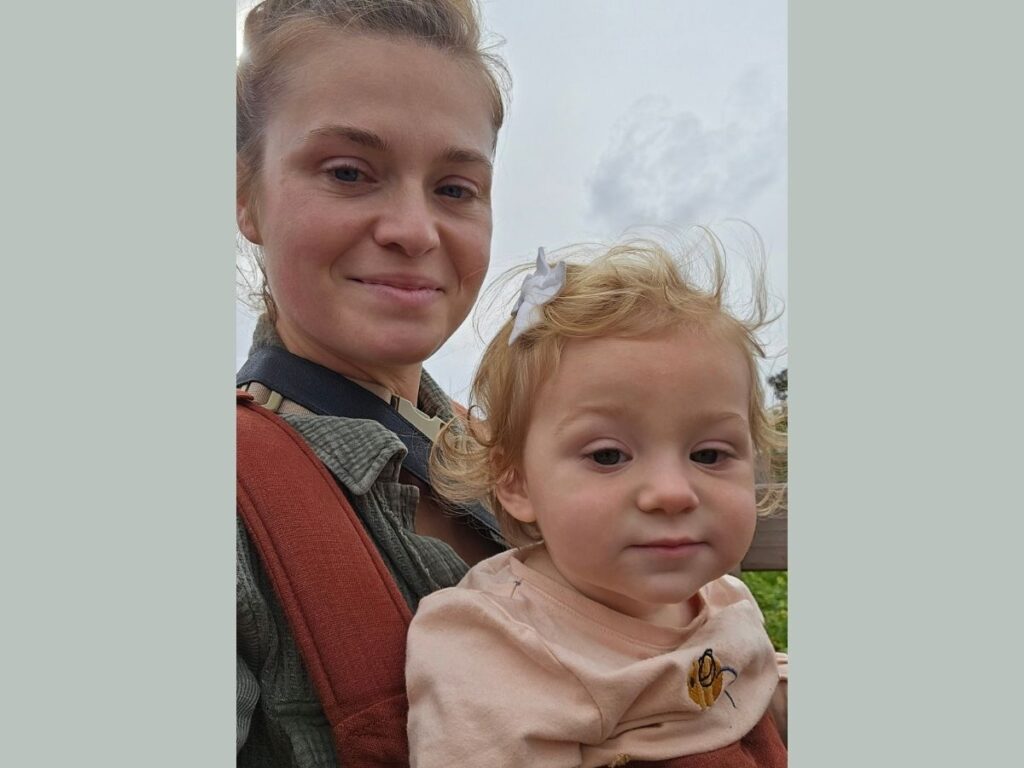
Some babies reach a stage where they want to see absolutely everything. If yours is leaning back to look around while facing you, you may be wondering when they can face forward in a baby carrier and which carrier will actually be comfortable for both of you.
In this article, front-facing means baby is on your chest and facing outward, away from your body. It’s also called forward-facing or world-facing. I’ve used a lot of carriers with my four kids, and the biggest difference I notice is how well each one supports a seated position for baby and how its waistband feels on the person wearing it.
The quick answer:
- Most babies aren’t ready to face outward until around 5 to 6 months, but age alone doesn’t determine readiness.
- Baby needs strong, consistent head and neck control, a face that sits fully above the carrier panel, and to meet the outward-facing requirements for that specific carrier. Some educators prefer to see tripod sitting (if you want to lean more cautious, no harm there!)
- My favorite options are the Tula Explore for substantial support, Ergobaby Omni Deluxe Mesh for a supportive all-around option, and Happy Baby Revolution (LETSTALK10 for 10% off) for a lighter apron-style design.
For families outside the US and Canada, the Izmi Baby Carrier and Breeze (CASSIDY10 for 10% off) are additional compact options to consider, with delivery available to many international destinations.
- Tushbaby (LETSTALK15 for 15% off) with the Snug attachment is another option, especially if you want the flexibility of a hip seat and an outward-facing hands-free carry. Its hard seat and waistband pressure make it less appealing to me for long stretches.
- If baby gets sleepy, slumps, or seems uncomfortable, turn them inward or take them out and reposition them.
This post may contain affiliate links. If you shop through my links, I may earn a commission at no additional cost to you.
When Can Baby Face Forward in a Carrier?
For many babies, outward-facing becomes an option around 5 to 6 months. That’s a starting point for checking readiness, not a universal milestone or permission to use every carrier facing out.
Before trying it, I look for all of these things:
- Strong head and neck control. Baby can hold their head steadily while awake and moving with you.
- Enough height above the panel. Baby’s entire face is clear, with the carrier positioned below their chin according to its instructions.
- The right size for this position. Baby ALSO meets the model’s outward-facing weight and developmental requirements, which can differ from its overall minimum weight.
- A secure, comfortable fit. Baby sits in the carrier as designed instead of slumping or hanging from the crotch area.
- An alert baby who is enjoying it. You can see their face and respond when they need a change.
A newborn should NEVER face outward in one of these carriers. A carrier being suitable for a newborn facing inward does not mean its outward-facing position is suitable for a newborn- even if they meet the weight minimum requirements and you feel they have strong neck control (more on that in another post, but this is almost exclusively tension and not strength. Over working this muscles can make it worse.)
My Favorite Front-Facing Baby Carriers of 2026
| Carrier | My pick for | What stands out | Main consideration |
|---|---|---|---|
| Tula Explore | My pick for Support with a heavier baby | What stands out Substantial waistband and a well-supported outward-facing seat | Main consideration Its firm waistband can feel like too much pressure on some postpartum bodies |
| Ergobaby Omni Deluxe Mesh | My pick for Best overall balance | What stands out Supportive seat, lumbar pad, and a waistband that feels somewhat softer than the Tula Explore | Main consideration Still a fairly substantial carrier |
| Happy Baby Revolution Use code LETSTALK10 for 10% off! | My pick for Short torsos and a minimal feel | What stands out Apron-style design with less bulk around the waist and hips | Main consideration Its outward-facing position starts at six months and sitting unassisted |
| Tushbaby + Snug Use code LETSTALK15 for 15% off! | My pick for Hip seat versatility and quick ups and downs | What stands out Can switch between an assisted hip seat and a hands-free carrier | Main consideration Firm seat and concentrated waistband pressure aren’t my preference for extended carries |
These categories reflect my experience wearing the carriers, not a promise that one model will fit every adult or baby the same way.
Best Support for a Heavier Baby: Tula Explore
The Tula Explore is one of my favorite forward-facing carriers because it gives baby a genuinely supported seated position. That matters to me. Some outward-facing setups leave baby looking as though they’re hanging from the center of the carrier, and that can be uncomfortable for both the child and the person carrying them.
The Explore also has a very structured waistband. Once my body was ready for that kind of pressure, I appreciated how much support it gave me, especially as baby got heavier. If I wanted to carry a bigger baby facing outward, this is one of the first carriers I would consider.
That same waistband is its biggest potential drawback. If you’re newly postpartum, recovering from pelvic floor trauma, or sensitive to firm pressure around your waist and pelvis, it may feel like too much- even if you’re just wearing facing inwards. There isn’t one postpartum timeline that makes a waistband comfortable for everyone. Pay attention to your symptoms and how your body responds.
For outward-facing specifically, Tula lists 14–25 pounds, strong head and neck control, and enough height for baby’s face to clear the panel. The Explore also offers inward-facing front and back carries, so you aren’t buying a carrier that’s useful for only one position.
I’d choose it if: You want substantial wearer support and like a firm, structured waistband.
I’d think twice if: Firm waistbands aggravate pelvic floor symptoms or dig into your body.
Best Overall Balance: Ergobaby Omni Deluxe Mesh

The Ergobaby Omni collection is another one I return to for its outward-facing fit. It gives baby a good seated position, while the carrier offers meaningful support for the person wearing it. I also appreciate the lumbar pad at the back of the waistband when I’m front carrying.
Compared with the Tula Explore, the Omni waistband feels a little softer to me. It’s still supportive, but it may be a more comfortable middle ground for someone who finds the Tula Explore’s waistband too firm. With a very heavy baby, though, I find the Tula’s more structured waist can feel more supportive.
There are differences within the Omni collection. The Omni Classic feels bulkier to me.
Ergobaby lists a 14-pound minimum for outward-facing in the Omni Deluxe, keep that in mind, but don’t rely on it solely! Make sure you always fold down the pillow AND baby sits high enough that their chin clears the panel. The Omni Deluxe can also be used for inward-facing front, hip, and back carries when the requirements for each position are met.
I’d choose it if: You want a supportive, versatile carrier with a lumbar pad and a waistband that feels less rigid than the Explore’s.
I’d think twice if: You strongly prefer a very minimal carrier or dislike having a substantial waistband around your body.
Best Minimal Option for Short Torsos: Happy Baby Revolution

The Happy Baby Revolution feels different from the other two. The distinction isn’t simply that it has a softer waistband. It’s an apron-style carrier, while the Tula Explore and Ergobaby Omni have waterfall-style waistbands. That change in design makes the Revolution feel much more minimal around the waist.
I especially like it for shorter torsos and for people who struggle with a firmer front-carry waistband pressing into their hips or upper legs. A structured waistband can land in an uncomfortable spot depending on your body. The Revolution gives you a different way to distribute and feel that pressure, while still offering a nicely seated outward-facing position for baby.
It’s also a good pick if you want a carrier that feels lightweight and packs down more easily. You can use the Revolution for inward-facing front and back carries as well, so the outward-facing option is as usual, only one part of its usefulness.
I’d choose it if: You have a shorter torso, want less bulk, or find waterfall-style waistbands uncomfortable.
I’d think twice if: You know you prefer the firmer, more substantial feel of a structured waistband for carrying a heavier child.
Best UK and International Option: Izmi Baby Carrier
For families shopping outside the US and Canada, the Izmi Baby Carrier is another option I’d consider. Its compact design gives you an outward-facing option without the substantial padding and bulk of some of the other carriers on this list.
The current model has spreadable, wrap-style shoulder straps, an adjustable seat, and a softly padded waistband. There’s also an Izmi Breeze Baby Carrier, which uses the same design with a mesh panel. Both offer inward-facing, outward-facing, hip, and back carries when baby meets the requirements for each position.
Izmi describes outward-facing as an option from around 4 to 5 months, but that age alone doesn’t mean baby is ready. Baby must have full head control that stays steady as you walk, and their chin must clear the top of the panel. Izmi recommends this position for short periods while baby is awake, generally within the 4-to-10-month stage. Follow the instructions for your exact model, and turn baby inward if they get tired or start to slump.
I’d choose it if: You’re shopping in the UK or another supported international destination and want a compact carrier with an outward-facing option.
I’d think twice if: You prefer thick shoulder padding or a substantial waistband, or you need delivery to the US or Canada, which Izmi currently excludes.
Best Hip Seat Option: Tushbaby with the Snug Attachment
A hip seat can be helpful for an outward-facing child, especially when they want to get up, look around, get down, and repeat that cycle all day. Tushbaby is one of the hip seats I’d consider for that job. It can take work off your arms and shoulders when you’re holding a child facing outward.
There are two different ways to use it:
- Tushbaby hip seat alone: This is an assisted carry. You must keep a supporting hand or arm on your child.
- Tushbaby hip seat with the Snug attachment: The Snug attaches to the hip seat to create a hands-free carrier that can be used facing inward or outward according to its instructions. The Snug is not a standalone carrier. Tushbaby lists 16–45 pounds for outward-facing with the Snug.
I still have reservations about using a hip seat for a long stretch. Its firm seat feels different from the fabric seat of my other picks, and it isn’t my favorite setup for extended wearing, whether baby is facing outward or inward. The weight also sits around the adult’s waist and pelvis in a way that can create noticeably more pelvic floor pressure for some wearers. If that’s an area of sensitivity for you, pay close attention to how it feels.
That doesn’t make it a poor option. It gives families a useful combination of quick assisted carries and an available hands-free setup. I just wouldn’t choose it as my default for a long walk when one of the other carriers fits us well.
I’d choose it if: Your child is frequently up and down, and you want both a hip seat and a hands-free outward-facing option.
I’d think twice if: Waistband pressure bothers your pelvic floor or you’re primarily shopping for extended carries.
What Does a Good Outward-Facing Fit Look Like?
A carrier’s outward-facing feature only helps if it fits your baby and your body well. Before walking around, pause and check:
- Baby’s face and airway: Their nose and mouth are unobstructed, their chin is clear of the carrier panel, and they aren’t slumping down.
- Head control: Baby can keep their head stable while you move. The carrier shouldn’t be expected to do that work for them in an outward-facing position.
- Seat and legs: Adjust the carrier exactly as its instructions show for facing out. I look for a secure, seated position rather than a baby hanging straight down from the crotch.
- Snugness: Baby is supported close to your body, without loose fabric that lets them sag.
- Your comfort: The waistband and straps aren’t causing pain, excessive pressure, or a feeling that you need to hold yourself in an awkward position.
- Baby’s cues: They seem comfortable and alert. If they slump, fall asleep, or seem ready for closeness, change positions.
An outward-facing weight range, baby development and baby size (clearing the panel height) are three different pieces of information. Check the position-specific instructions every time you try a new model.
Is Forward-Facing Bad for Babies?
I don’t think this question deserves a blanket yes or no. Outward-facing isn’t something every baby needs, and it isn’t automatically harmful when a developmentally ready baby is carried correctly in a carrier designed for it.
Hips are one common concern. The International Hip Dysplasia Institute says outward-facing may not be harmful, while recognizing inward-facing with supported, flexed hips as a hip-healthy position. There is no evidence that supports hip or otherwise harm for short duration, outward-facing carries. Fit, positioning, duration, and a child’s individual medical needs all matter.
I also don’t use a universal 5 or 15-minute rule for every baby. I watch the individual child. If they’re happy and well supported, I don’t need a timer to tell me the carry has suddenly become unsafe. If they’re tired, slumping, or asking to turn back toward me, I change positions. Keep in mind that it can be used as a short term tool vs the standard way of carrying.
Outward-facing can be fun, but it’s optional. A baby facing inward can still turn their head, watch what’s happening, interact with you, and take in the world.
What If Baby Wants to Look Around but Isn’t Ready to Face Out?
You have other options. I’d first check whether baby is sitting at a good height while facing inward. Many babies can see plenty from a comfortable inward-facing front carry.
Depending on your child’s development and the carrier’s instructions, you might also try a hip carry so they can see to the side while staying connected to you. Later, an appropriate back carry can give a curious baby a different view without relying on an outward-facing front position. For older babies assisted carry options can also be a great tool!
Front-Facing Baby Carrier FAQ
Can a newborn face forward in a carrier?
No. The outward-facing position has safety requirements a newborn does not meet. Even if a carrier can hold a newborn facing inward, wait until your baby meets its separate outward-facing instructions.
Does my baby have to be six months old to face forward?
It depends on the carrier. Around 5 to 6 months is a common time to start assessing readiness, but age alone isn’t enough. Check head control, panel clearance, fit, and the exact model’s rules.
Can baby sleep facing outward?
No, if baby falls asleep facing outward, I would turn them inward or take them out and reposition them rather than leave them slumped in an outward-facing carry. Continue checking that their face and airway stay clear.
How long can a baby face forward?
There isn’t one evidence-based minute limit that applies to every baby and every carrier. Follow your carrier’s instructions, check the fit often, and respond to your baby’s cues. Outward-facing is a position you can use when it works, then change when it no longer does. I like to lean towards less over more for both myself and my baby.
Can every buckle carrier face outward?
No. Only use that position if the specific model is designed for it. For example, Happy Baby lists the Revolution as its forward-facing carrier, and Tula identifies the Explore as its forward-facing option.
Which Front-Facing Carrier Would I Choose?
If I wanted the most substantial support with a heavier baby, I’d reach for the Tula Explore. If I wanted a versatile middle ground with a supportive seat and lumbar pad, I’d look at the Ergobaby Omni Deluxe Mesh. If a firm waistband crowded my hips or I wanted a lighter carrier on a short torso, I’d choose the Happy Baby Revolution (LETSTALK10 for 10% off!)
And if my day involved lots of quick pickups, I’d consider Tushbaby (LETSTALK15 for 15% off), adding the Snug when I wanted a hands-free carry.
The best choice depends on where the waistband sits on your body, how your baby fits in the outward-facing position, and whether you’ll still enjoy using the carrier when your baby wants to face you again. Forward-facing can be one useful option in your babywearing toolkit. It doesn’t have to be the only way your baby gets a good view.