
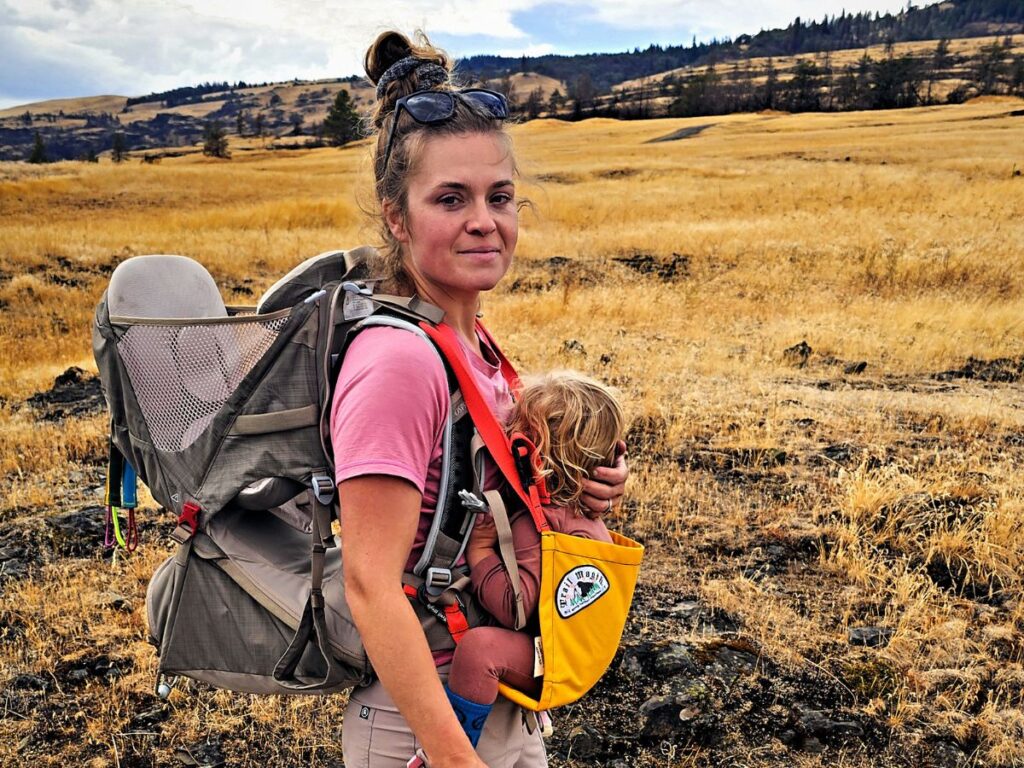
Buckle Carrier vs. Hiking Backpack: Which Is Better for Hiking With a Baby or Toddler?
If you’re planning to hike with a baby or toddler, you might assume that eventually you need to graduate from a regular buckle carrier to one of those big structured hiking backpacks.
You really don’t.
I’m a mom of four and a certified babywearing educator, and I’ve hiked with babies, toddlers, and bigger kids in just about every setup you can think of. I’ve used buckle carriers, structured hiking packs, lightweight hiking carriers, and I’ve tandem carried when one child inevitably decides their legs no longer work halfway through the hike.
And I genuinely like both buckle carriers and structured hiking packs.
But I don’t think a structured hiking pack is automatically the better option for hiking. In fact, there are quite a few situations where I would specifically choose a buckle carrier instead.
So if you’re trying to decide between the two, here’s how I look at it.
Buckle Carrier vs. Structured Hiking Pack: The Quick Answer
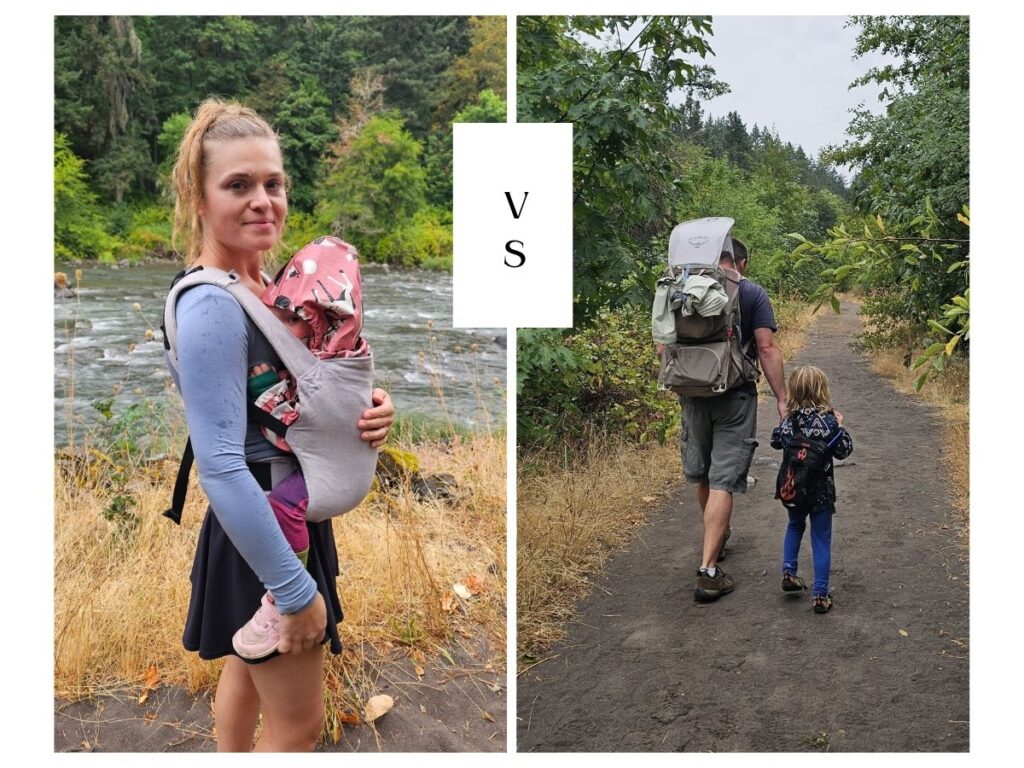
If I could only own one, I would choose a buckle carrier.
A good buckle carrier can be used for hiking, traveling, errands, naps, everyday babywearing, and so much more. You can also start using many buckle carriers well before a baby is developmentally ready for a structured hiking pack.
That doesn’t mean I don’t love having a hiking pack.
Structured hiking packs can be fantastic when it’s really hot, I need to carry a lot of stuff, multiple adults will be switching off carrying the child, or I want somewhere I can safely set the pack down while getting ready.
Here’s the really quick breakdown:
If you prioritize… | I’d generally choose… |
Younger baby | Buckle carrier |
Closeness | Buckle carrier |
Heavier child | Often a buckle carrier |
Easy ups and downs | Buckle carrier |
Tandem carrying | Buckle carrier |
Technical or overgrown trails | Often a buckle carrier |
Lots of storage | Structured hiking pack |
Maximum airflow | Structured hiking pack |
Easy caregiver switching | Structured hiking pack |
Built-in sun/weather accessories | Structured hiking pack |
Setting the carrier down while loading | Structured hiking pack |
One carrier for hiking AND everyday life | Buckle carrier |
There are obviously exceptions to all of these. Your body, your child’s body, the specific carriers you’re comparing, and the type of hiking you’re doing can change the answer.
But this is generally where I start.
First, What's the Difference?
When I say buckle carrier, I’m talking about the soft structured baby carriers most people already think of for everyday babywearing.
Brands like LennyLamb, Tula, Ergobaby, Kinderpack, Happy Baby, and many others make carriers that can be worn on the front and/or back depending on the carrier and your child’s developmental stage.
They’re soft, relatively compact, and hold your child directly against your body.
A structured hiking pack, sometimes called a framed child carrier, is different.
Think Osprey Poco, Thule Sapling, Deuter Kid Comfort, or Kelty. If you’re interested in comparing structured hiking backpacks, I have a full review of the top hiking backpacks post.
These have an internal or external frame, a separate seat for the child, a harness system, and usually significantly more storage. Your child sits farther away from your body and generally higher on your back.
That difference affects a LOT more than just how the carrier looks.
When Can a Baby Use a Structured Hiking Pack?
This is probably the most important difference if you’re hiking with a younger baby.
Structured hiking packs are generally intended for children who can sit independently.
And I want to explain what that actually means, because “sitting” can be interpreted in a million different ways.
I’m not talking about a baby who can stay upright for a second if you carefully position them and keep their hands planted on the floor.
I want to see the baby able to sit upright and actually use their hands while they’re there. Think sitting and holding or playing with a toy for a few moments without immediately collapsing forward or needing their hands to prop themselves up.
That tells us something important about the underlying head, neck, and trunk control they have developed.
In a structured hiking pack, the carrier isn’t holding your baby’s torso closely against your body the way a properly fitted buckle carrier does. They need enough postural control to maintain that more independent seated position as you move.
This is why I wouldn’t choose a structured hiking pack just because a baby has reached a certain age.
Development matters more than the birthday.
For example, Deuter says its child carriers are designed for children who can remain seated independently and have good head control. Kelty similarly states that a child should be able to sit upright unassisted before using its framed child carriers.
Always check the instructions for your specific hiking pack because minimum developmental, weight, and size requirements vary by manufacturer.
What About a Buckle Carrier?
This is one of the biggest advantages of a buckle carrier.
Many buckle carriers are designed to appropriately support much younger babies, including newborns, depending on the specific carrier and its minimum size requirements.
So if I’m hiking with a baby who hasn’t reached the developmental requirements of a structured hiking pack yet, I’m reaching for an appropriately fitted buckle carrier.
There’s no reason you have to wait to start hiking together just because your baby isn’t ready for a hiking backpack.
Which Is More Comfortable for Carrying a Heavy Toddler?
This one surprises people.
You would think the giant framed hiking backpack would automatically distribute a 30-pound toddler better than a regular buckle carrier.
In my experience, that isn’t necessarily true.
I actually tend to find a well-fitting buckle carrier more comfortable for carrying heavier children, especially when I can get them into a really good back carry. If you’re carrying a bigger toddler or preschooler, I break down the options I reach for most in my best toddler carriers post.
It comes down to where the weight is sitting.
With a buckle carrier, I can get my child’s body really close to mine. Their center of gravity isn’t sitting way behind me or significantly above me.
With many structured hiking packs, the child sits higher and farther away from your body. The pack itself also weighs something before you’ve even put a child, water, snacks, diapers, and everything else inside.
That changes how the load feels.
A structured hiking pack can have an incredible suspension system and a really supportive hip belt, but that doesn’t automatically mean the child is going to feel lighter.
I’ve carried heavier children and done longer distances in buckle carriers than I have in structured hiking packs.
What About Balance and Uneven Terrain?
This is another place where I don’t automatically give the win to a hiking pack.
Keeping a child’s weight close to my own body can make it easier for me to move naturally and maintain my balance.
There’s also the height issue.
A child in a structured hiking pack may sit quite a bit higher than you do. That’s great for their view.
It’s less great when you forget they’re up there and walk underneath a branch.
This isn’t just something I’ve noticed. Framed carrier manufacturers specifically warn caregivers to account for the child’s increased height around branches, door frames, and other obstacles.
With a buckle carrier, my child is generally much more contained within the space my own body is already occupying.
On narrow, overgrown, uneven, or more technical trails, I really appreciate that.
Where Structured Hiking Packs Win: Storage
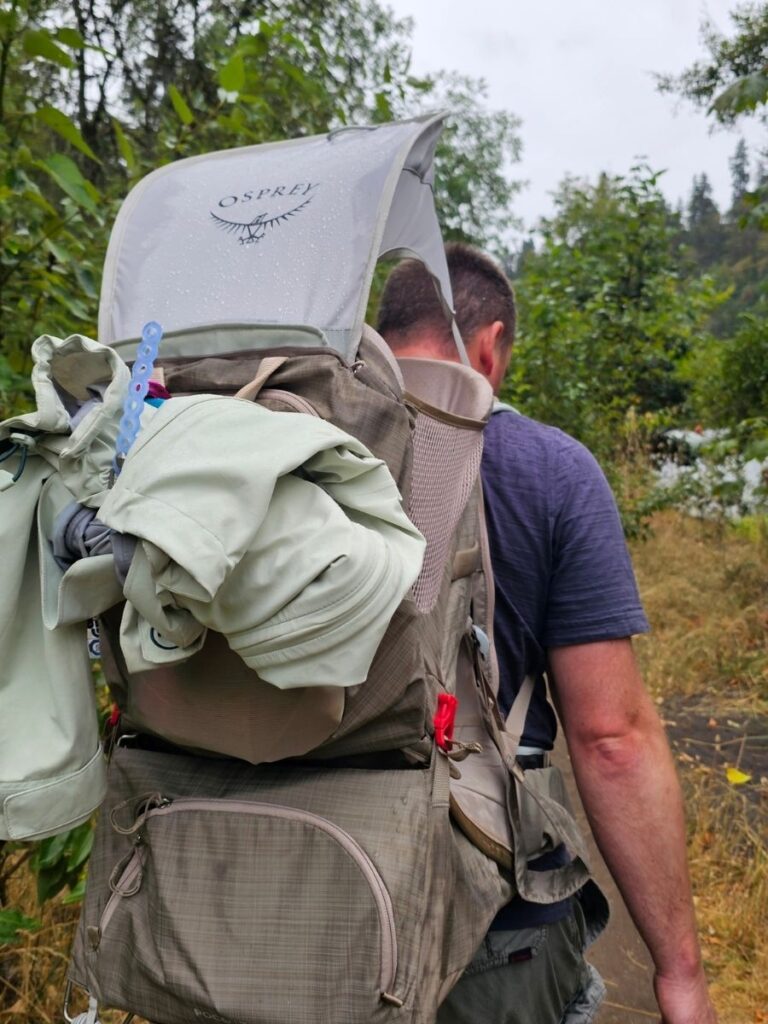
This one isn’t even close.
Structured hiking packs win.
Depending on the model, you can have space for:
- Water
- Snacks
- Diapers
- Wipes
- Extra clothes
- Sunscreen
- First aid supplies
- Toys
- Hiking gear
- The 14 rocks your toddler has decided absolutely must come home
If I’m hiking with a buckle carrier, I need another plan.
Sometimes another adult carries a backpack. Sometimes I pack really lightly. And sometimes a fanny pack is enough to hold the essentials.
But if I’m hiking alone with a child and need to bring quite a bit of gear, the storage built into a structured hiking pack can be a HUGE advantage.
Structured Hiking Packs Also Tend to Be Cooler
If you’re hiking somewhere hot, this can be one of the biggest reasons to choose a structured pack.
A buckle carrier holds your child’s body directly against yours.
That’s lovely for closeness.
It’s also two warm bodies pressed together while you’re climbing uphill.
Structured hiking packs create more space between you and your child, and many have back panels specifically designed for airflow.
They tend to be significantly cooler and allow for better heat distribution.
That doesn’t mean overheating can’t happen in a hiking pack. You still need to pay attention to temperature, sun exposure, clothing, hydration, and your child’s comfort.
But if I know we’re going somewhere really hot, a structured pack becomes much more appealing.
What About Weather?
This one can go either way.
Many structured hiking packs have really nice sunshades, rain covers, and other weather accessories designed specifically for the carrier.
That’s incredibly convenient.
But buckle carriers aren’t automatically bad in weather.
A good babywearing coat or carrier cover can give you a ton of protection, and having your child directly against your body can be really nice in cold weather.
So I’d generally say:
Hot weather: advantage structured hiking pack.
Rain and sun: structured packs often have more convenient built-in or dedicated accessories.
Cold weather: I often really like the closeness and shared warmth of a buckle carrier with appropriate layers or a babywearing coat.
Getting a Toddler Up and Down
Buckle carrier.
By approximately 10 million percent.
Okay, maybe more like 10x.
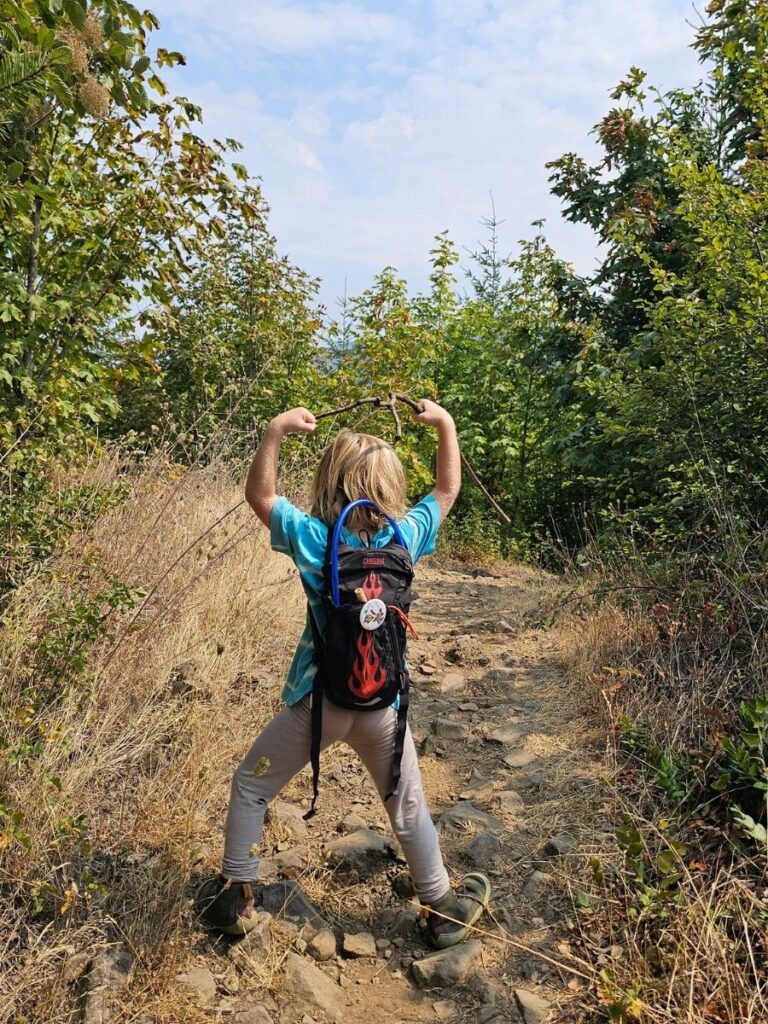
But seriously, once you have a toddler who wants to:
Walk.
Up.
Walk.
Snack.
Up.
Actually no, DOWN.
Wait, up again.
I find a buckle carrier so much easier.
I can get a toddler onto my back relatively quickly, carry them for a while, put them back down, and repeat the process as needed.
A structured hiking pack takes more effort.
That doesn’t mean loading one is particularly difficult, but there’s a frame, child harness, adjustments, and then the process of getting the entire loaded pack onto your body.
For a child who will stay in the carrier for a significant portion of the hike, that’s fine.
For a toddler who wants to hike independently and just needs frequent little breaks, I would much rather have a buckle carrier.
BUT Structured Packs Are Easier to Switch Between Adults
Here’s where the frame becomes really useful.
If my husband and I are switching off carrying, I can take the structured hiking pack off, set it down with the kickstand deployed according to the manufacturer’s instructions, and then he can put it on.
We aren’t trying to transfer a toddler directly from one person’s back to another.
You will still need to adjust the adult fit when switching between caregivers, especially if you’re different sizes, but the process itself can be really convenient.
IMPORTANT: A kickstand does not turn a framed carrier into a freestanding chair where a child can be left unattended. Follow your manufacturer’s instructions anytime the carrier is on the ground.
Which Is Better for Naps?
I don’t have a strong preference here.
If the child is developmentally appropriate for the carrier and everything is being used and adjusted correctly, either can work well for naps.
With either option, I want to periodically check the child.
Their position can change once they fall asleep, especially as their body relaxes. Make sure you’re following the instructions for your particular carrier and regularly checking on their position, temperature, and overall comfort.
Which Gives the Child a Better View?
Structured hiking packs definitely give a different view.
Your child is generally sitting higher and farther away from your body, which gives them a pretty incredible view of the trail.
Some kids LOVE this.
Other kids couldn’t care less and would rather be snuggled against you.
This is one of those areas where your child’s personality actually matters.
If I have a baby or toddler who really wants closeness, I would probably choose a buckle carrier.
If I have an older baby or toddler who wants to see absolutely everything, the hiking pack can be really fun.
What If My Child Wants to Walk Most of the Hike?
This is where I want to throw in a third option: the Trail Magik.
The Trail Magik isn’t really a buckle carrier or a structured hiking pack.
It attaches to a compatible hiking backpack and gives an older child a supported place to ride on the front when they need a break.
I REALLY like this option for the stage where your toddler or preschooler can hike a significant distance independently, but you know there will eventually be a point where they’re done.
Instead of carrying an entire structured hiking pack for a child who might ride for 15 minutes, I can bring the Trail Magik and pull it out when I need it.
It’s also incredibly useful when you’re hiking with multiple children.
Buckle Carriers Are Much Easier for Tandem Carrying
If there’s even a chance I’m going to end up carrying two kids, this heavily influences what I bring.
A buckle carrier gives me far more flexibility.
I can have one child on my back and potentially use an appropriate assisted carrier or another carrying option on the front depending on everyone’s ages, sizes, and the carriers I’m using.
A structured hiking pack is much bulkier and takes up significantly more physical space around my body.
I’ve absolutely used structured packs while hiking with multiple kids, especially combined with something like the Trail Magik, but if my priority is maximum flexibility, I tend to lean toward the buckle carrier.
When I Would Choose a Buckle Carrier
I’d generally grab my buckle carrier when:
- My baby isn’t developmentally ready for a structured hiking pack.
- My baby or toddler wants a lot of closeness.
- I don’t need to carry a ton of gear.
- I’m carrying a heavier child and want their weight really close to my body.
- We’re on uneven or overgrown terrain.
- My toddler will be getting up and down frequently.
- I may need to tandem carry.
- I want something that packs down small.
- I want one carrier that works for hiking AND everyday life.
There are tons of buckle carriers that can work well for hiking.
I’ve used carriers from LennyLamb, Tula, Ergobaby, Kinderpack, Happy Baby, and plenty of others.
The “best” one is going to depend much more on your body, your child’s size, and the fit of that particular carrier than whether it has hiking anywhere in its name. Check out my buckle carrier page if you are interested in learning more.
When I Would Choose a Structured Hiking Pack
I’d be more likely to grab the hiking pack when:
- It’s really hot.
- I need maximum airflow.
- I’m carrying a lot of water, snacks, diapers, or other gear.
- Multiple adults will be switching off carrying.
- I want the convenience of being able to set the pack down while loading or switching caregivers.
- My child enjoys the higher view.
- I want dedicated sun or weather accessories.
- The particular pack is simply more comfortable for the person carrying that day.
I’ve used structured packs from Osprey, Thule, Deuter, and Kelty, and they all fit and feel surprisingly different.
If you’re specifically shopping for one, I have a separate comparison where I go much deeper into the individual packs I’ve used.
So...Do You Actually Need a Hiking Backpack?
Nope.
This is probably the biggest thing I want parents to take away from this.
You do not need a structured hiking pack to legitimately hike with your baby or toddler.
They’re awesome tools.
They solve some problems incredibly well.
But they aren’t the next developmental step after a baby carrier, and I don’t consider them inherently better for serious hiking, longer distances, or heavier children.
I’ve personally hiked longer distances and carried significantly more weight in buckle carriers than I have in structured hiking packs.
There are hikes where I’d pick my structured pack without hesitation.
There are also hikes where I own one and intentionally leave it at home.
If I Could Only Buy One...
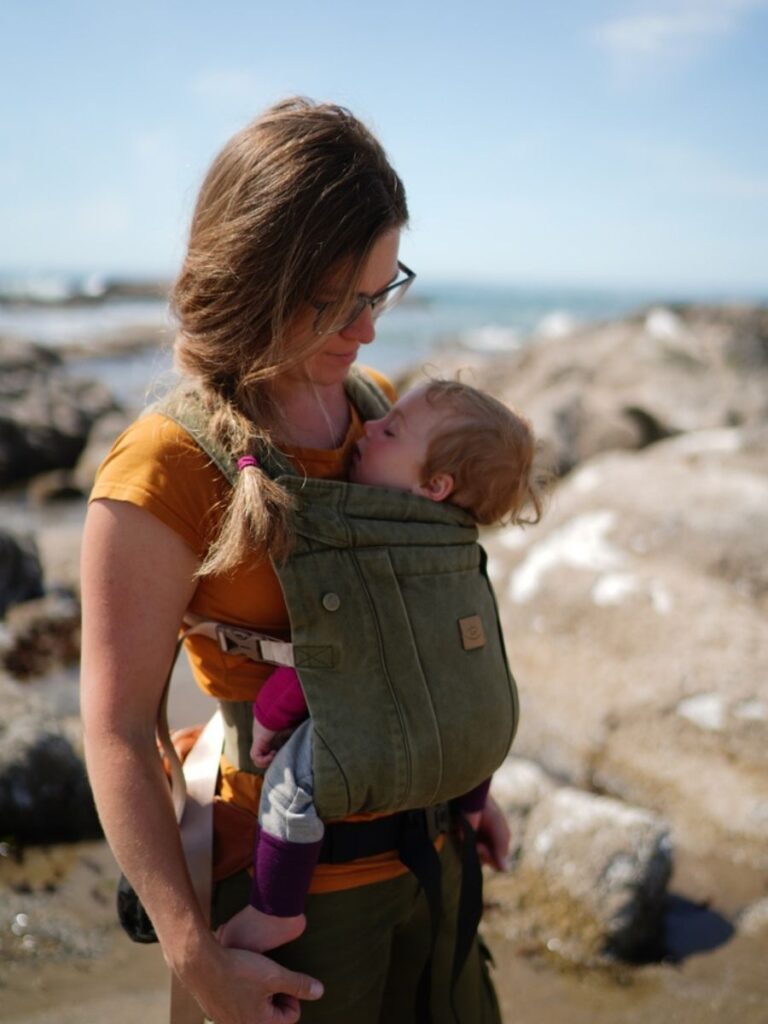
I’d buy the buckle carrier.
Not necessarily because it’s “better” at hiking.
It’s just significantly more versatile.
I can use a good buckle carrier with a younger baby, take it hiking, use it while traveling, throw it in the car, carry a tired toddler, use it for everyday errands, bring it somewhere without hauling a giant frame around, and potentially continue using it for years depending on the carrier.
Then, if hiking becomes a major part of your family’s life and you realize you’re constantly wishing you had more airflow, more storage, or the features of a framed pack?
That’s when I’d start looking at structured hiking carriers.
You don’t have to choose one because it’s the carrier you’re “supposed” to use for hiking.
Choose the tool that actually makes sense for the child you’re carrying, your body, the trail you’re on, and what you need to bring with you.
And sometimes that giant hiking backpack really is awesome.
Sometimes the baby carrier you already own is exactly what you need.
Safety Notes for Hiking With a Baby or Toddler
Whichever carrier you choose:
- Follow the age, developmental, weight, and size requirements for your exact carrier.
- Make sure your child is positioned and secured according to the manufacturer’s instructions.
- Check your child’s position periodically, especially if they fall asleep.
- Pay attention to temperature and weather exposure.
- Remember that a child in a framed hiking pack may sit significantly higher than your own head.
- Take breaks and give older babies and toddlers opportunities to move.
- Account for the weight of your child and everything you’re packing when checking a structured pack’s total load limit.
- Never leave a child unattended in a framed hiking carrier, even when its kickstand is deployed.
And remember that hiking adds another layer to babywearing safety.
Your balance changes when you’re carrying another person, regardless of the carrier. Slow down when you need to, choose terrain that matches your experience, and don’t feel like the gear you’re using determines whether you’re a “real” hiking family.
The best setup is the one that lets everyone actually enjoy being outside together.